

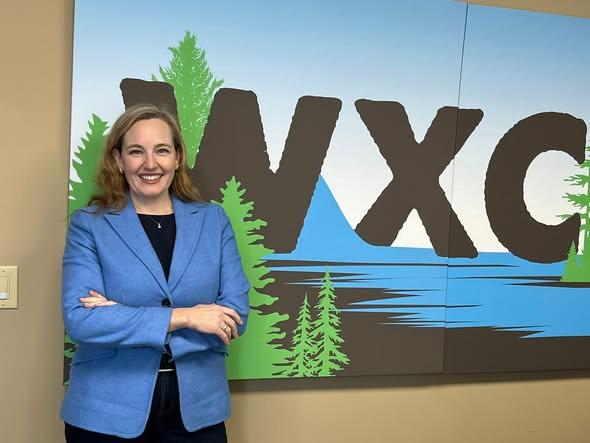
Source: Chad Holmes
In conversation with Kelda Roys
State Senator Kelda Roys represents the 26th state senate district. She stopped by the WXCO studio to talk about her run for governor.

Jan 19, 2026, 9:59 PM CST


Share
State Senator Kelda Roys entered the race for Governor in September. She currently serves the 26th District, which includes Madison.
Roys stopped by the Wausau studios for an interview with Station Manager Chad Holmes on January 19. Here’s what she had to say. This conversation has been edited for clarity and brevity.
You were actually born in central Wisconsin. Can you talk a little about your background and your connection to this area?
I was born in Marshfield, but we lived in rural Taylor County outside of Medford. I grew up in a one-room schoolhouse with my parents, my little sister, and our pet goat, Penelope. We would drive into Wausau to attend the Unitarian Universalist congregation, so I have very fond memories of this area. Central Wisconsin is home for me in a very real way.
What formed your political philosophy? Was there a point in your life when it really focused?
I come from a family that always believed being involved in politics is one way to be a good citizen. My mom is a social worker, and my dad spent his career in law enforcement. They settled in north central Wisconsin because of the quality of life and the strength of our public schools.
Service was always a part of our family. One of my earliest memories is running around as a toddler carrying a campaign sign and singing a little song I made up. Civic engagement was always something positive and important in my household.
You’ve run for governor before. Why is this run, this time, the right time for you?
I have the most experience of any candidate in the race. This is a moment when we need courageous and capable leadership—leaders who can stand up to the threats facing our farmers, small businesses, families, and economy.
It’s also a moment of opportunity. For the first time in a generation, Wisconsin could flip the legislature. We need a governor who understands state policy, the state budget, and how to push through long-needed changes. We can’t afford leadership that lacks experience or conviction.
What positions you well to handle threats from the federal government, and how would you handle them?
I’ve spent my entire career standing up to bullies and billionaires. We cannot have a governor who is afraid or who will cower under pressure.
We need to use every tool available to protect Wisconsinites—our economy, our pocketbooks, our laws, and our lives. That kind of leadership requires courage and a willingness to act, even when it’s hard.
What should the Democratic Party and its leaders be doing over the next 10 months before the election?
People want a fighter who also knows how to get things done. I hear that everywhere—in red areas and blue areas alike. Voters want someone who will stand up for them and tell the truth about what’s happening.
They also want someone who can deliver real results. That combination matters, and we’ve seen it work in other states with leaders who have experience, focus on affordability, and aren’t afraid to take on tough fights.
What is the best example of you getting something done for the people you’ve served?
One recent example is expanding access to healthcare by allowing nurse practitioners to practice to the full extent of their training. Wisconsin was behind the times, especially with provider shortages in rural and urban areas.
For years, I worked on this issue, often as the only Democrat pushing the bill alongside Republicans. It was vetoed several times, but we kept working, and in 2025 it finally became law.
Effective leadership in a purple state requires listening, coalition-building, and taking political risks. I’ve passed laws under Democratic control, split government, and Republican control.
What are your plans to address the lack of healthcare access in rural Wisconsin?
Expanding access for nurse practitioners will help, but it’s not enough. We also need more home health services and more overall capacity.
We’re facing an urgent crisis, with hundreds of thousands of Wisconsinites at risk of losing health insurance. I believe healthcare should be a right, not something determined by wealth, employment, or geography.
My plan allows individuals, families, and businesses to voluntarily buy into the state employee health insurance plan. That gives people security, lower costs, and economic freedom—and it helps keep rural hospitals open.
What is your policy on wind and solar, especially when there is pushback from landowners?
People deserve a voice in their communities. Preserving the rural character of Wisconsin matters deeply, and local control is essential.
At the same time, wind, solar, and geothermal energy are some of the fastest and cheapest ways to meet our energy needs. They have to be part of the solution.
The key is appropriate siting, transparency, and making sure communities benefit. We also need to protect ratepayers and ensure farmers aren’t forced into decisions because they have no other economic options.
What do you think the government’s role should be when it comes to artificial intelligence?
I see both opportunity and risk. As an entrepreneur, I know technology can make services more accessible and government more efficient, especially in rural areas.
But as a parent, I’ve seen how unchecked technology has harmed kids’ mental health and social development. We cannot blindly welcome massive tech projects without safeguards.
We need transparency, strong protections, local control, and assurances that workers are fairly paid and communities are protected.
Do you have a plan for rural areas to replace jobs lost as the economy changes?
Yes. Broadband access is essential so people can work where they live. Rural communities offer a great quality of life, but families need affordable childcare and strong public schools.
Schools are the heart of rural communities, and voucher programs have drained resources from them. I’ve put forward a plan to end that system and reinvest in public education.
We also need to invest in small businesses. Programs like Main Street Bounce Back grants help fill vacant storefronts and can transform entire communities with relatively small investments.
What is your overall plan to maintain the University of Wisconsin system, including two-year campuses?
This didn’t happen by accident. Years of funding cuts and policy decisions undermined our universities, especially two-year campuses.
Not everyone needs to go to college, but everyone who wants that opportunity should have access to it. Two-year campuses are critical pathways for students and economic engines for their communities.
Education—from early childhood through higher education—is one of the best investments we can make in Wisconsin’s future.
How do you see Wisconsin addressing its demographic challenges and keeping young people here?
We need to make it possible for people to build a life here. That means economic opportunity, affordable housing, paid family leave, accessible childcare, and student debt relief.
Policies that attack reproductive rights or target LGBTQ people send a message that young people aren’t welcome. That’s not who we should be. Wisconsin can be more welcoming and more competitive.
To wrap up, are there any other major priorities you want people to know about as your campaign begins?
I encourage people to look at my proposals and, more importantly, to reach out and share their ideas and concerns.
This is a moment of real opportunity for Wisconsin. We need a governor with the courage to stand up when it matters and the conviction to actually get things done.

Isabela Nieto is a reporter for Civic Media based in Wausau, where she reports for WXCO/Bull Falls Radio. She moved to central Wisconsin after stints reporting local and state news in Illinois. Reach her at [email protected].
Want More Local News?

Civic Media
Civic Media Inc.
The Civic Media App
Put us in your pocket.