

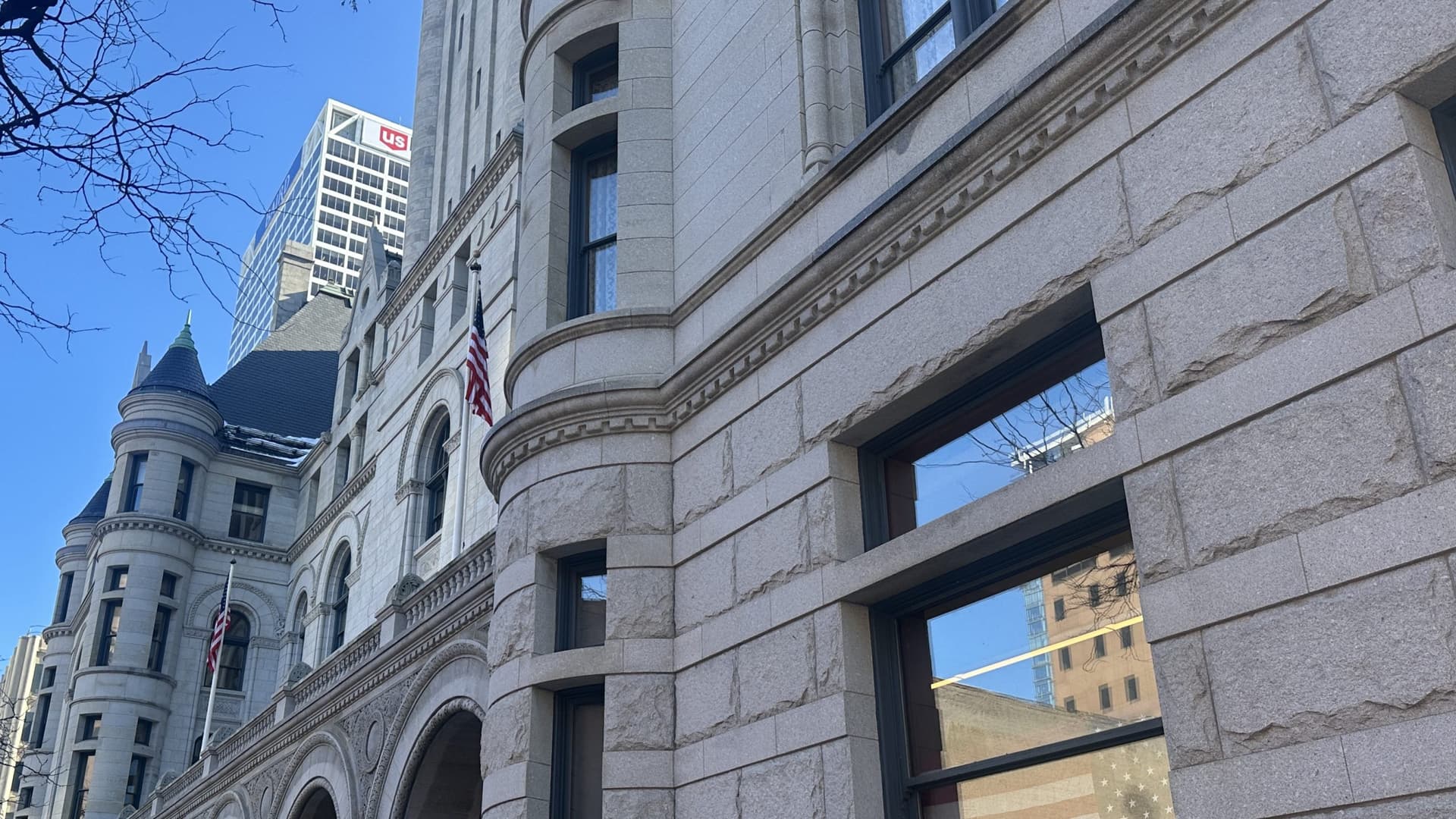
Dugan trial marches on
Judge Dugan is charged with obstructing federal agents and helping Eduardo Flores-Ruiz, who is undocumented, to evade authorities.

Dec 17, 2025, 12:56 PM CT


Share
On the third day of the case against Milwaukee Court Judge Hannah Dugan, jurors heard testimony from Carl Ashley, Chief Judge of the First Judicial District, who expressed skepticism that judges have authority to intervene with arrests in a public hallway.
Asked by prosecutors if the judiciary has such authority, Ashley said, “I do not believe so.”
Judge Dugan has been charged with obstructing federal agents and helping Eduardo Flores-Ruiz, who is undocumented, to evade authorities.
The prosecution has structured its argument around five main points outlined by the indictment, including that Dugan took Flores-Ruiz’s case out of order and directed him to exit through a private door.
Meanwhile, the defense has argued that Judge Ashley had yet to formalize a policy and that Dugan’s actions were a routine part of her duties.
The nationally-watched case has been seen as a test of the federal government’s power to enforce immigration law — a signature issue on which Donald Trump based his presidential campaigns.
While early in his presidency Trump pledged to focus enforcement on those convicted of serious crimes, data recently obtained and published by the Deportation Data Project shows that in the first nine months of Trump’s second term, around 75,000 people arrested by ICE did not have a criminal record.
That’s more than a third of all ICE arrests, NPR reported last week.
Protestors demonstrate in support
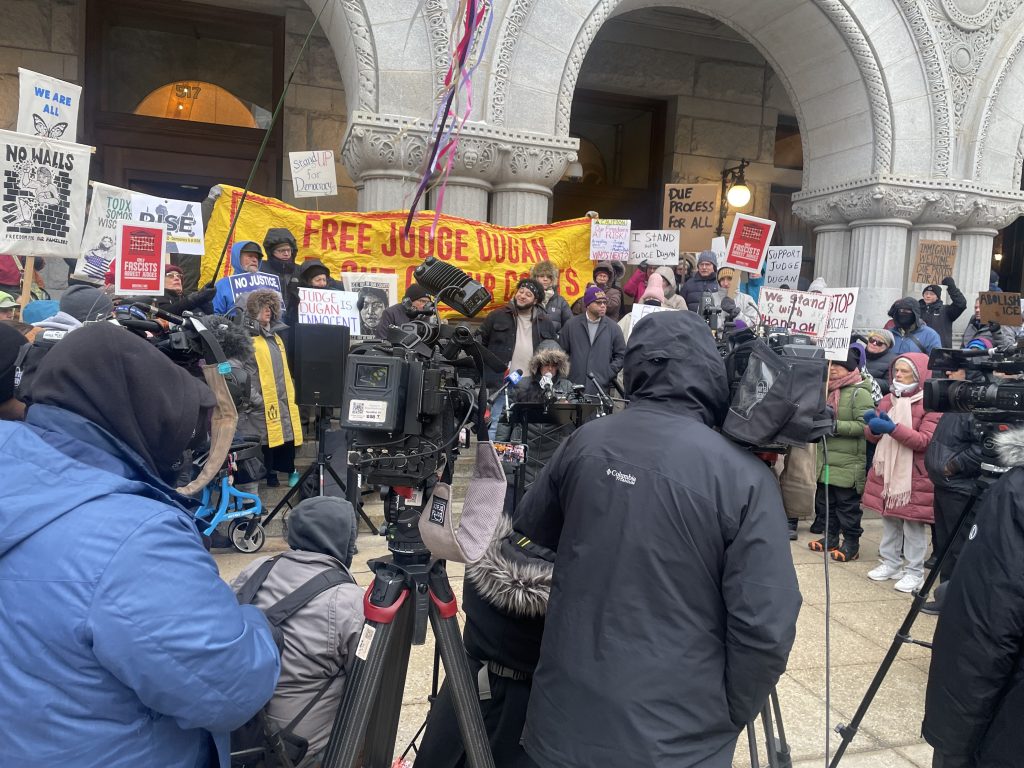
To some observers, including those who braved the frigid temperatures Monday morning to express support for Dugan, the case is a struggle for civil rights and public safety.
Immigrant rights advocates said at a Monday morning press conference that all community members must be free to report crimes and attend court hearings without fear of being arrested by immigration agents.
Federal authorities, meanwhile, argue that it’s safer to intercept those accused of breaking immigration law at a courthouse than in the community, given that they must pass through a metal detector and are less likely to be armed.

Mario Koran is an investigative reporter based in Milwaukee. His work has appeared in The New York Times, The Guardian, Voice of San Diego and Wisconsin Watch. He’s a Wisconsin native and a graduate of the University of Wisconsin-Madison.
Want More Local News?

Civic Media
Civic Media Inc.
The Civic Media App
Put us in your pocket.


